
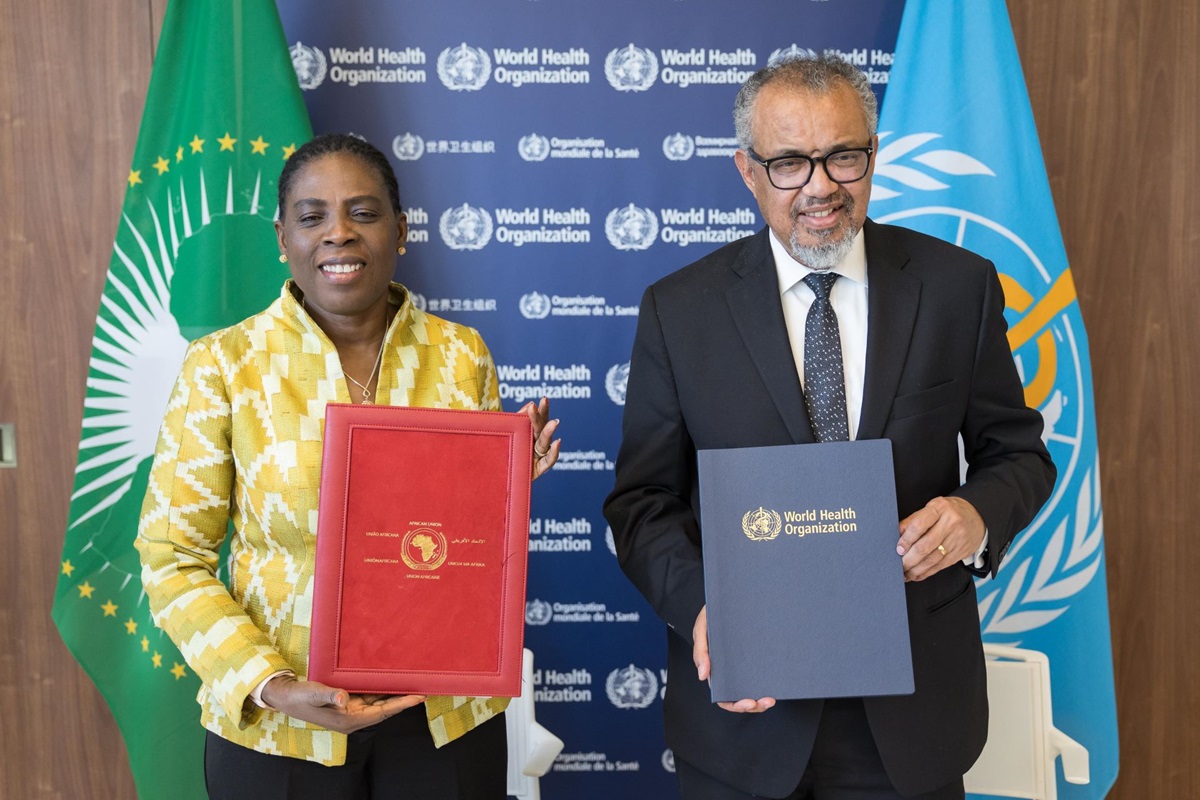
AU and WHO reset the playbook for African health systems, creating clearer pathways for women's health investment
The renewed AU–WHO memorandum of understanding turns continent-level policy alignment into a practical set of priorities that lower structural barriers for investors in maternal and reproductive health, local pharma, digital platforms, and workforce solutions. Investors should reweight exposure to companies and consortia positioned to deliver on RMNCAH, local manufacturing, regulatory harmonization, and emergency-resilient services.
By Fern Capital Insights
Source: WHO News
Top-line insight
The updated partnership between the African Union and the World Health Organization is more than diplomatic reaffirmation; it is a coordinated policy signal that aligns technical leadership, continental governance, and programmatic priorities around a defined set of health-system objectives, creating clearer demand signals for private capital and social investors focused on women's health in Africa.
What the agreement does, in practical terms
The memorandum re-centers collaboration on a limited set of priorities that matter for investors: strengthening primary care and regulatory systems, accelerating reproductive, maternal, neonatal, child and adolescent health interventions, supporting local pharmaceutical capacity, integrating nutrition and food security into health programming, and improving joint responses to emergencies and climate-related shocks.
Why this matters specifically for women's health
By elevating RMNCAH and a continent-wide campaign to reduce maternal deaths, the partnership increases the predictability of public-sector demand for maternal health commodities, workforce training, digital continuum-of-care tools, and nutrition-linked interventions, which are the core commercial and impact markets for women-focused health innovators.
Investment opportunities created or accelerated by the MoU
- Local pharmaceutical and diagnostics manufacturing paired with regulatory harmonization to reduce import dependency and shorten procurement cycles for maternal health commodities.
- Digital maternal and reproductive health platforms that integrate with national health information systems and support task-shifting for midwives and community health workers.
- Workforce capacity and training solutions that scale clinical mentoring, credentialing, and remote supervision to lower maternal mortality.
- Nutrition-sensitive maternal health programs that bundle supplementation, counseling and food security linkages for higher-impact per-dollar interventions.
- Financing mechanisms that expand domestic health spending, including pooled procurement, social insurance innovations, and blended finance to catalyze capital into primary care.
- Emergency-resilient service models that preserve maternal and child care during crises, including supply chain contingencies and mobile service delivery.
Each opportunity is underpinned by policy levers the MoU seeks to activate: technical guidelines from WHO, continental coordination and normative leadership from the AU, and an implied push for member states to shift from short-term aid dependence to longer-term domestic financing and capacity building. That combination reduces policy risk for investors who prefer working where governments explicitly prioritise purchases, procurement reform, or regulatory pathways.
Risks and constraints investors must weigh
The memorandum is a framework not a financing commitment, and outcomes will vary by country governance, procurement maturity, and fiscal space. Donor budget contractions remain a headwind for transitional financing, and harmonization efforts can take years to deliver streamlined approvals or pooled procurement benefits. Political fragmentation across AU member states means scale strategies must be designed for phased, country-by-country uptake rather than instant continent-wide rollouts.
Near-term signals to monitor
- Adoption timelines and technical guidance issued jointly by WHO and AU for regulatory convergence in pharmaceuticals and diagnostics.
- Procurement commitments or pooled-buying mechanisms that name maternal health commodities and set multi-year purchase volumes.
- Country-level budgetary movements toward domestic health financing or earmarked funds for RMNCAH.
- Pilot projects that integrate digital maternal health tools with national health information systems.
- Financing vehicles or blended funds launched to underwrite local manufacturing or workforce scaling.
For women-focused health companies, these signals translate into commercial levers: validated regulatory pathways shorten time-to-market, pooled procurement increases order visibility, and public adoption of digital standards reduces integration costs for platform providers.
Fern's practical recommendations for investors
Prioritise deals that map directly to AU/WHO priorities, especially RMNCAH, manufacturing, and digital interoperability; structure investments to bridge the transition from donor-funded pilots to domestically financed programs; and favour consortium approaches that pair technology providers with established on-the-ground service delivery partners and procurement-savvy regional distributors to accelerate scale and de-risk execution.
The renewed AU–WHO partnership reduces policy ambiguity around several levers that shape market size and adoption for women's health solutions. That does not eliminate execution risks, but it does create a clearer roadmap for investors who are prepared to engage across policy, procurement and implementation to unlock durable impact and returns.

More from Fern

Unmet demand for testosterone in menopause care creates an investable gap — if safety and regulatory questions are solved

EMA’s women’s health roadmap is a regulatory inflection point — what investors should build for now

Small randomized trial in UK opens pathway to stopping lifelong heart drugs for some HER2 breast cancer survivors—what investors in women's health should watch next
Stay Informed
Women's health is moving fast. Keep up.
Get Fern's latest research, investment commentary, and event invitations delivered to your inbox.